Stranjer
An experiment in game design.
Role — Game Designer | UX Designer | Game Developer
Timeline — March-May 2024
Tools — GameMaker Studio 2 | Figma
A journey of a thousand lightyears begins at home
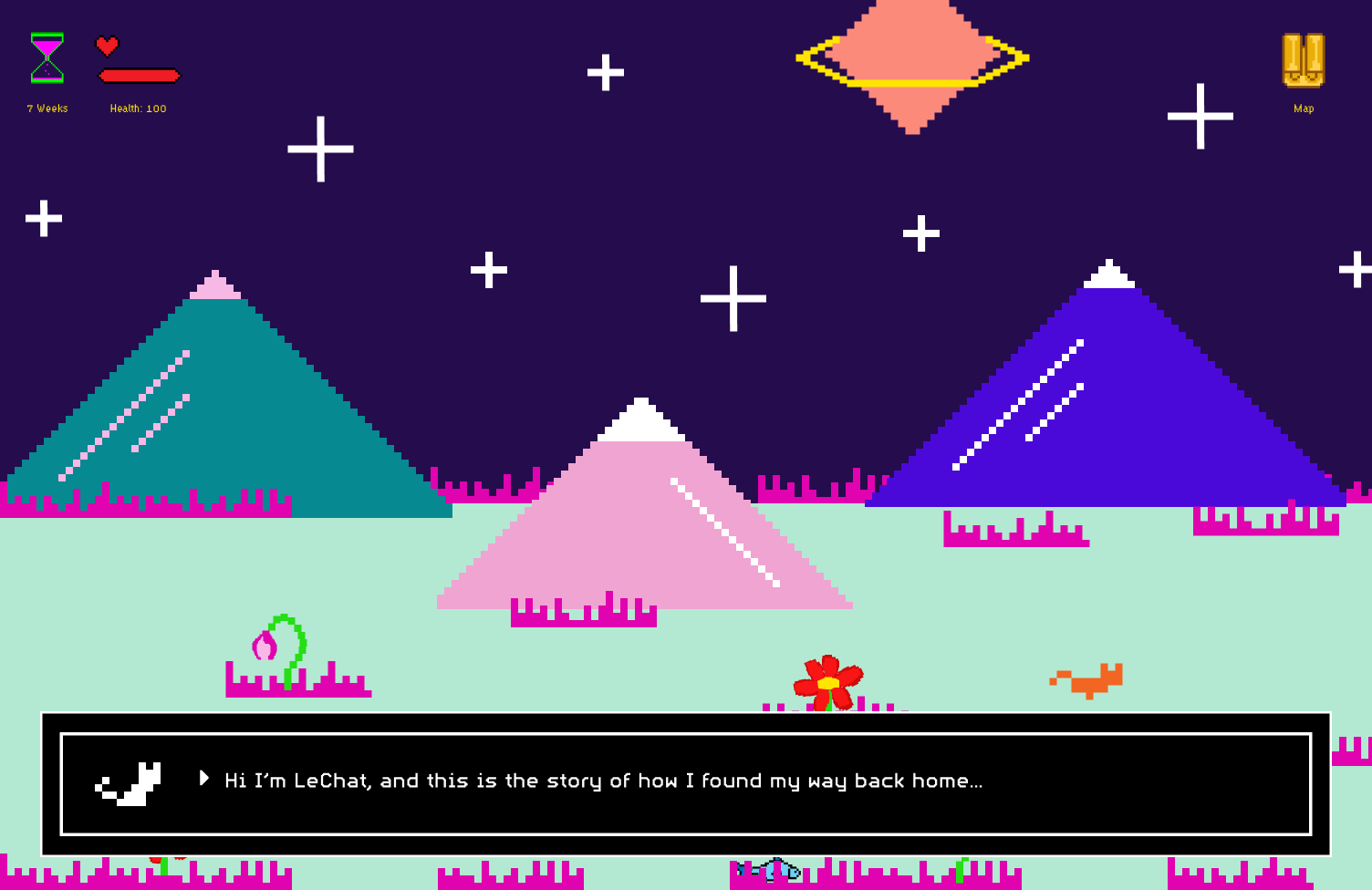
Stranjer captures both LeChat’s (the main character) story and my own. As I designed this 2D pixel art adventure game about a curious cat venturing beyond Earth, I was taking my own first steps into the vast field of game design. What began as a simple creative challenge evolved into an exploration of game design, visual storytelling, creative coding and player experience. This project became my stepping stone into the world of game design, building a foundation that helped me understand how games can connect emotion, mechanics, and story into an interactive experience.
Inispiration and Concept Development
I wanted to write a story that was based in reality, but presented in a playful, nostalgic manner so as to be able to connect with the story, without the player being too emotionally overwhelmed. The story became a reflection of my own experience with the deep, all-consuming loneliness of starting over in a new country, surrounded by strangers and uncertainty.
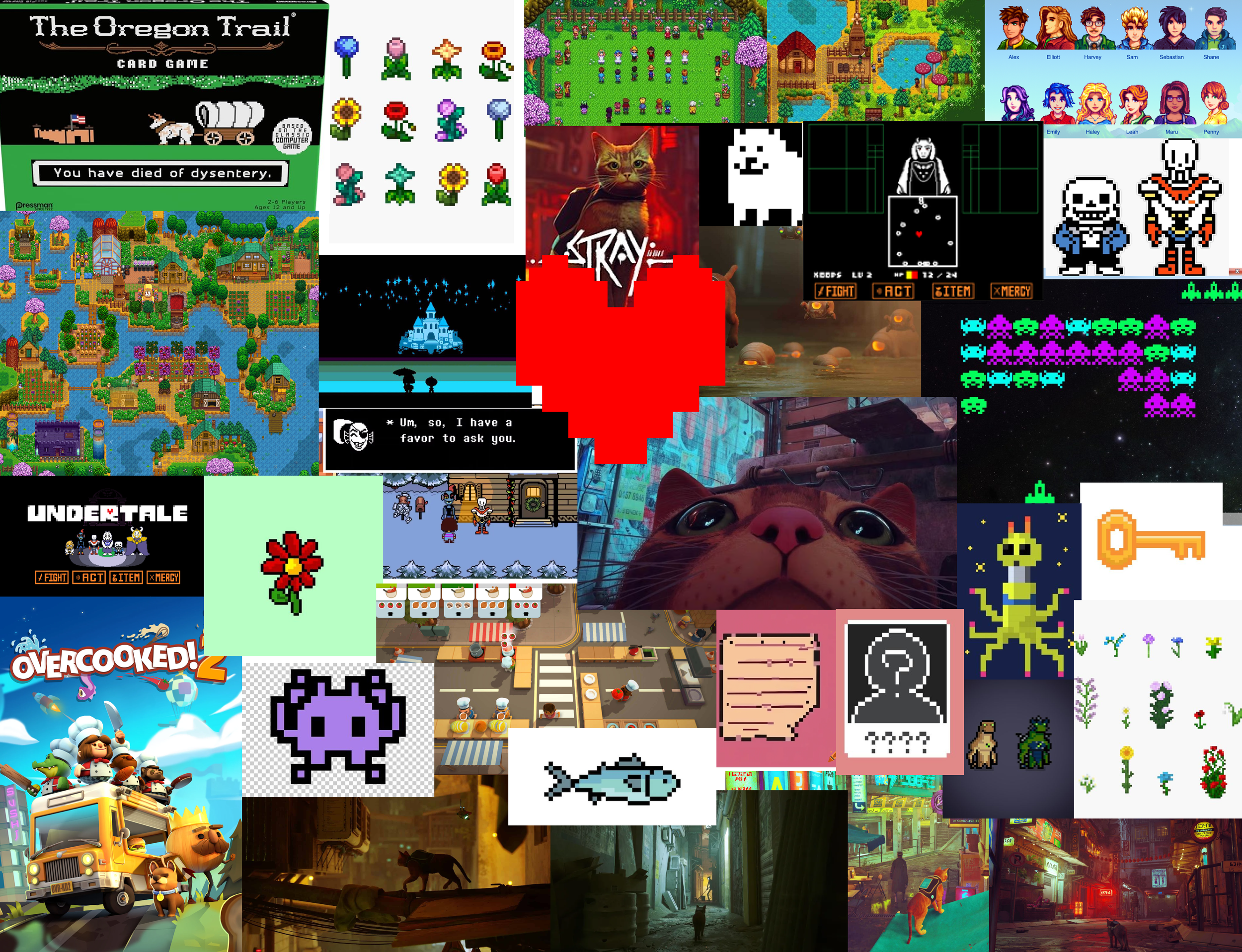
I drew inspiration from indie-style games like Stardew Valley for its community, personal goals, and scene layout. I also revisited Undertale for its unique characters, 16-bit artsyle, and dark and suspenseful feel. I enjoyed looking into Stray as the main character is also a cat that is trying to survive in a dystopian world. Although the game I created is a simple point and click one, it was enjoyable to draw inspiration from and revisit these games.
Visual Design
Character
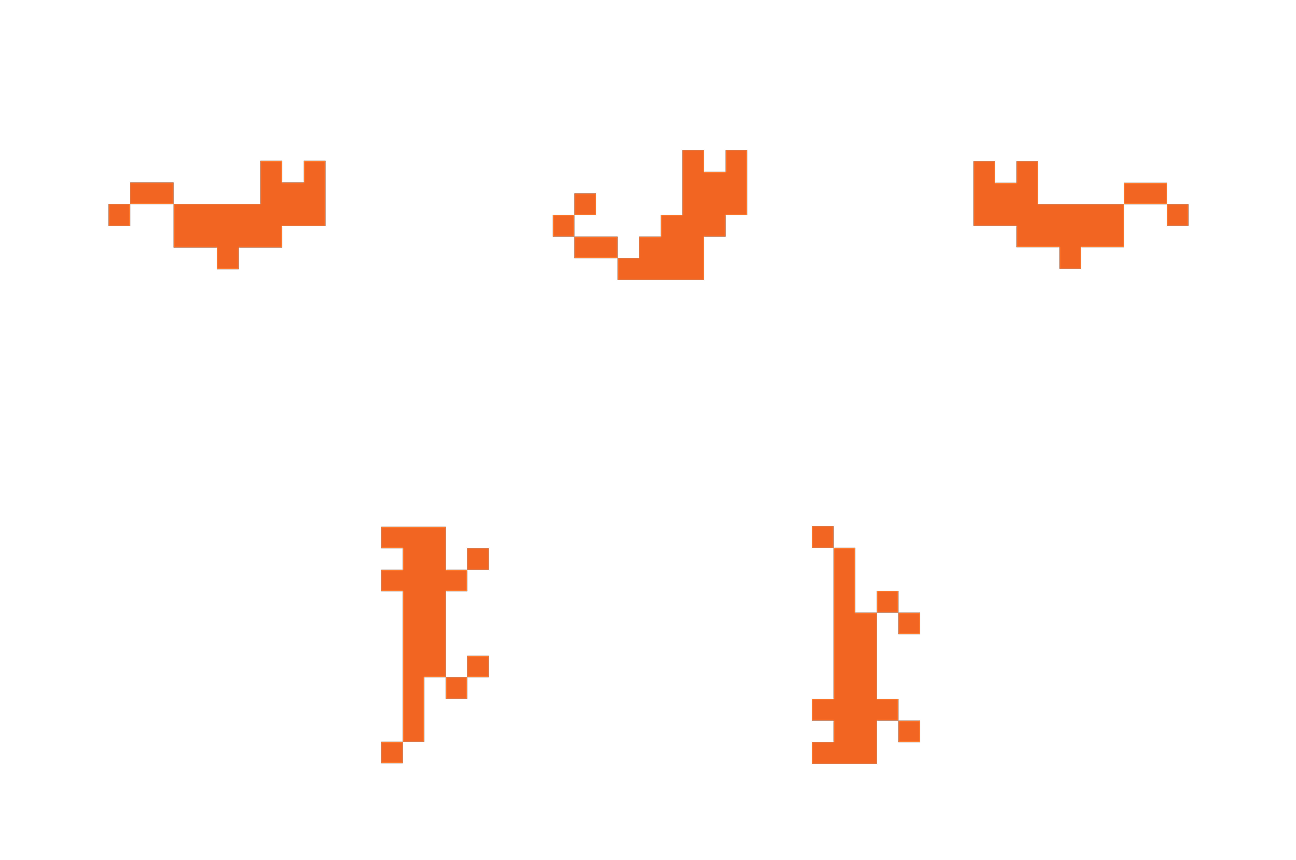
I wanted the player to play as a character that is not human to create a sense of dissociation from reality and inviting a form of playful escapism. I was contemplating between a rabbit and a cat, but eventually chose to go with a cat for thematic reasons and smooth animation. The hopping animation of a rabbit could tend to be jarring and slow down the player, so this felt like the right choice. Orange cats are also known to embody curiosity, silliness, and independence, making them the perfect fit for LeChat - our main character.
Colors
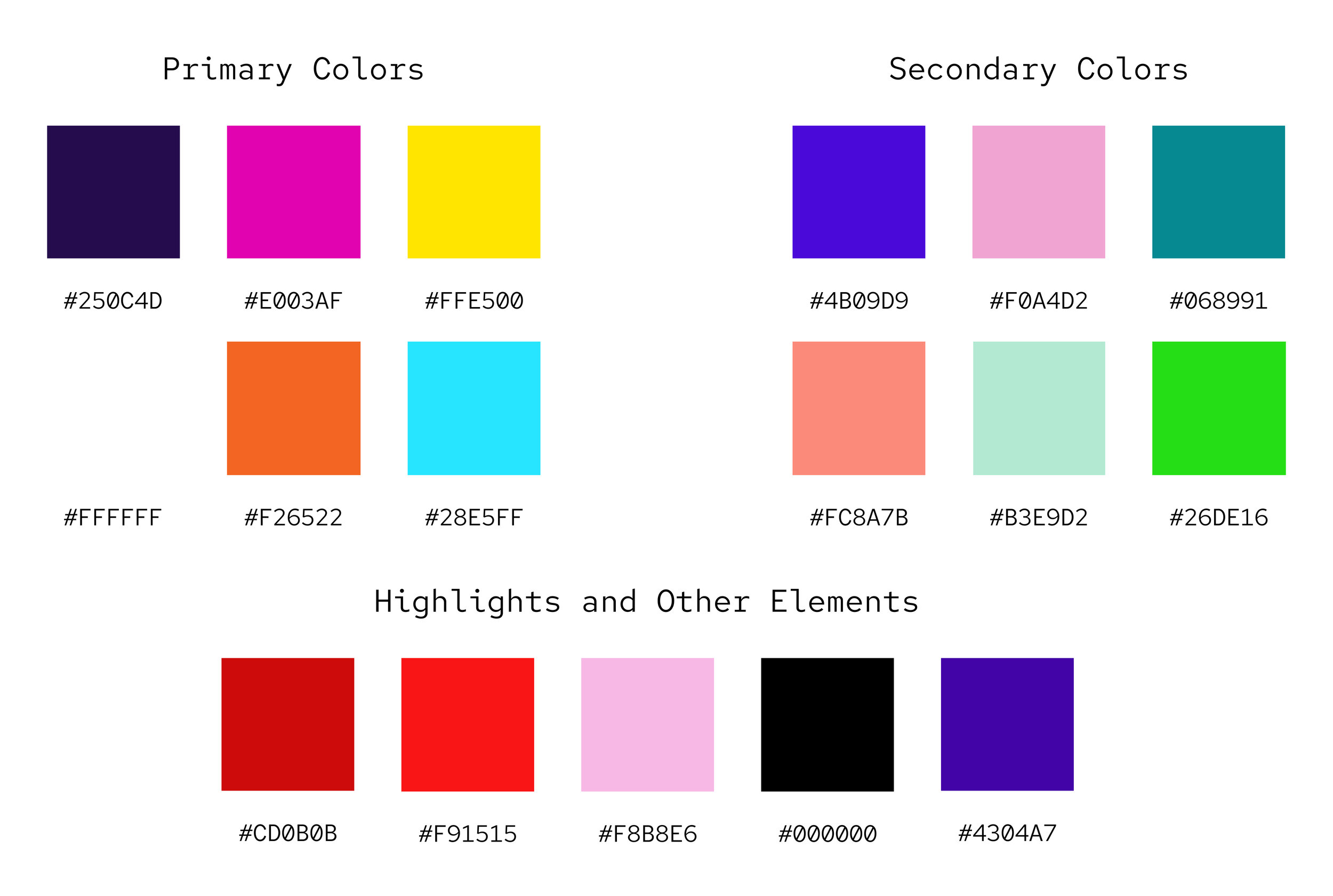
I knew I wanted the background to feel dark and expansive, reflecting the night sky and the loneliness it evokes. However, rather than using pure black, I chose a deep purple to suggest the subtle glow of light pollution, and to hint at the Stranje Planet’s unique atmosphere, which might distort the sky’s color.
For the remaining elements, I used bright and neon colors to create a vivid contrast against the dark background and to bring a youthful, playful energy to the game. I also wanted to challenge myself creatively by experimenting with bold, eye-catching colors that I hadn’t worked with before.
Typography
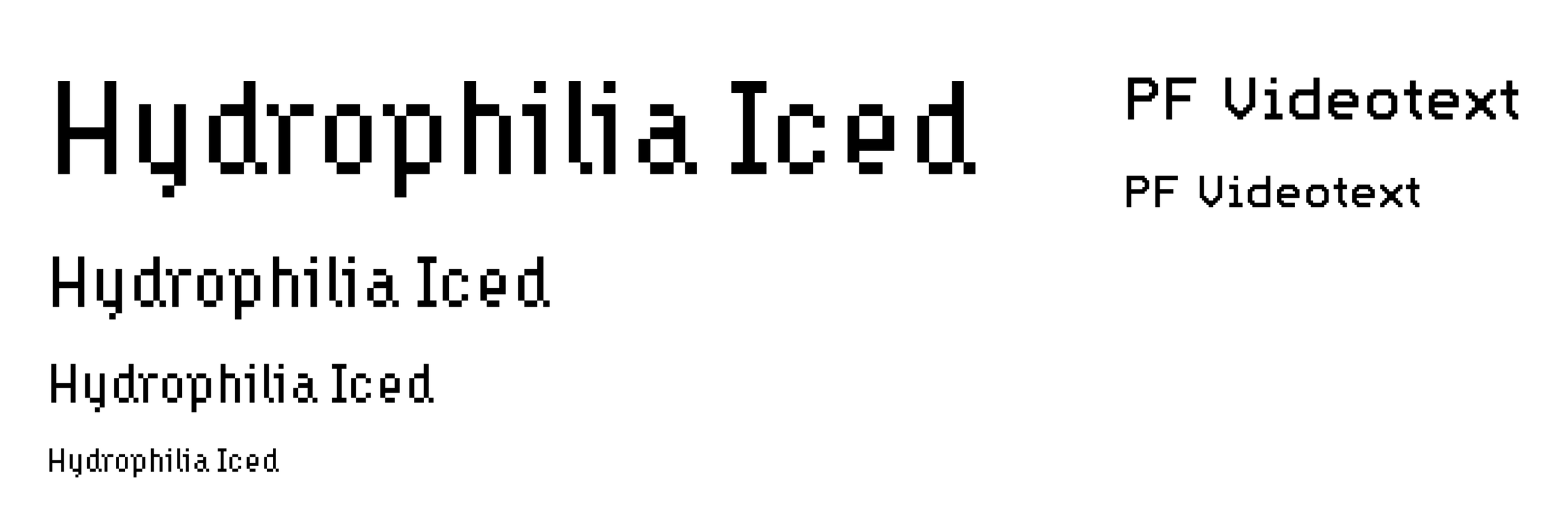
Since my game required minimal text, I had the freedom to experiment with more playful and visually expressive typefaces. I wanted something that complemented the pixel art aesthetic of my game, and was digital, geometric, and slightly nostalgic. After exploring several options, I chose Hydrophilia Iced and PF Videotext, both of which captured the retro, digital feel I envisioned and paired well with my game’s visual elements and background art.
Sprites and Components
Creating the sprites for this game turned out to be the most challenging, but also the most rewarding, part of the project. Because I was committed to maintaining a strict 16-bit aesthetic, none of the components could have any curved edges, and every element had to be built from individual 16×16-pixel blocks. I initially tried designing the icons and background elements in Figma (yes, from scratch!), but quickly realized it was both tedious and highly impractical for pixel art. I also tried using Aseprite, but the trial version didn’t allow me to download or save my sprites without purchasing the full license.
After some trial, error, and frustration, I discovered a workaround: creating my components directly in GameMaker Studio 2, the same tool I was using for development, and exporting them as PNGs to use in my Figma screens for prototyping the game UI. This approach made it much easier to design more intricate icons, like the hourglass and map, while keeping others simpler for consistency and efficiency. The result is a mix of minimalist and slightly more detailed components that together captured the 16-bit style I was aiming for.

UX and Interaction Design
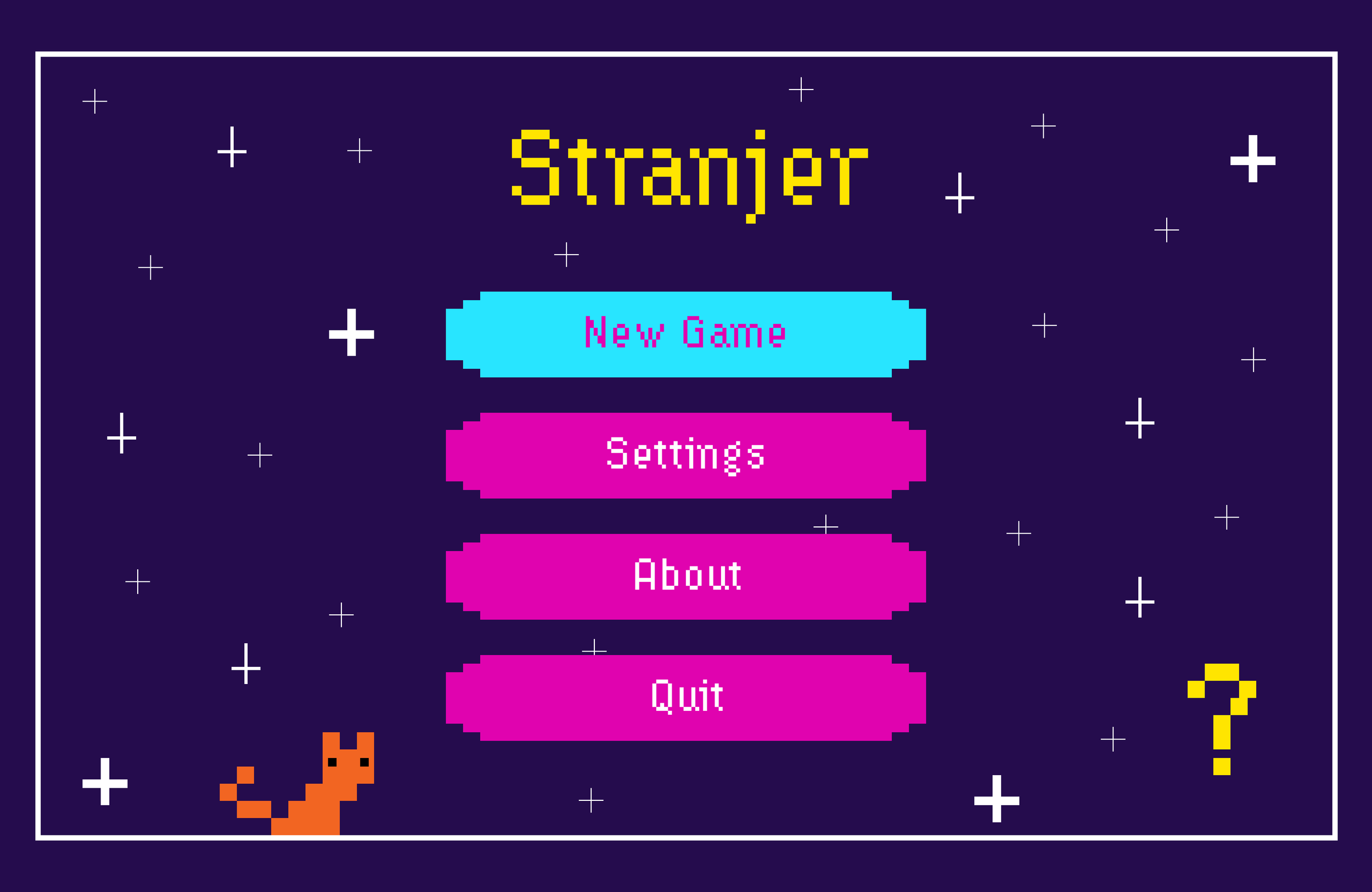
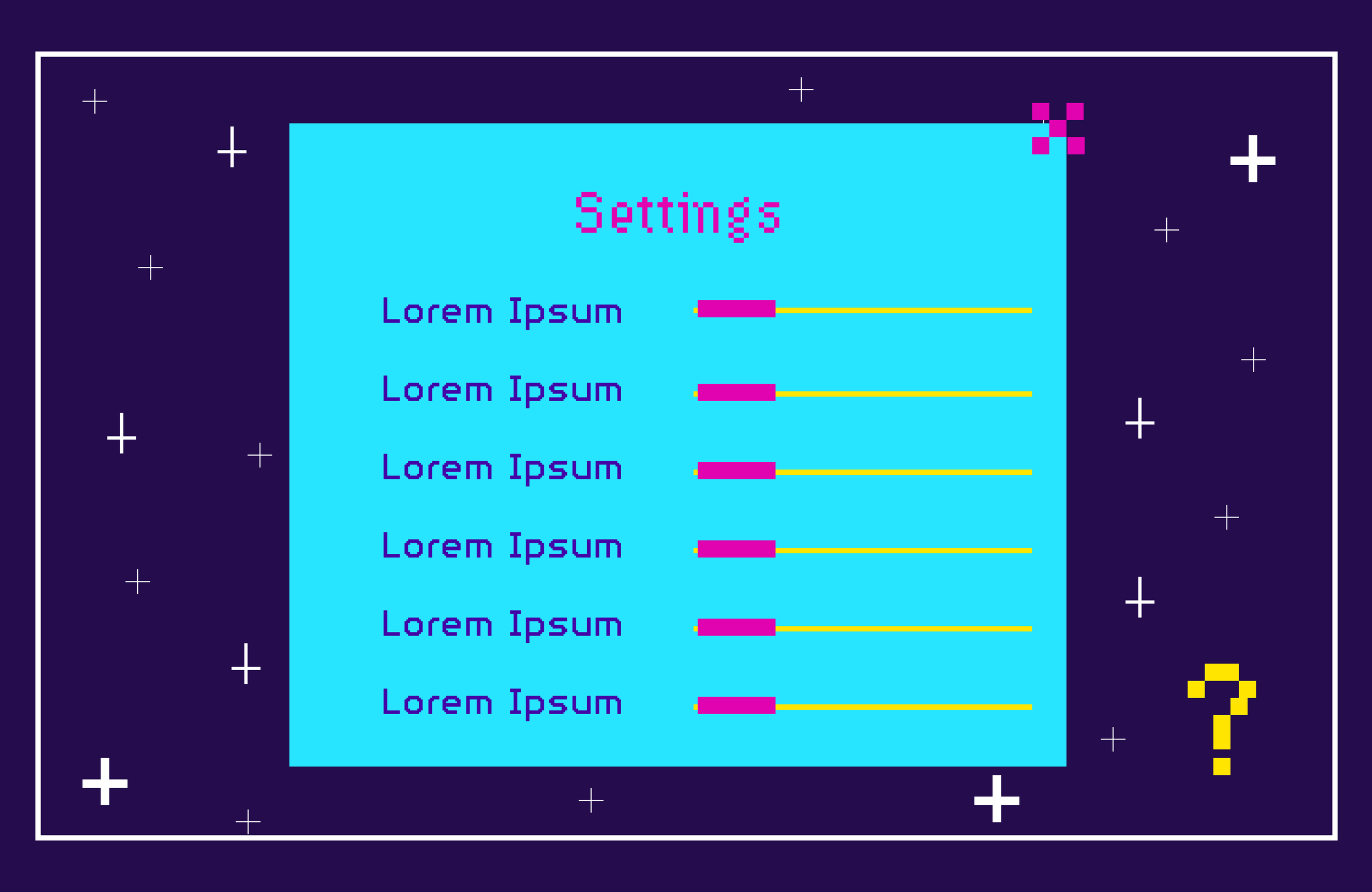
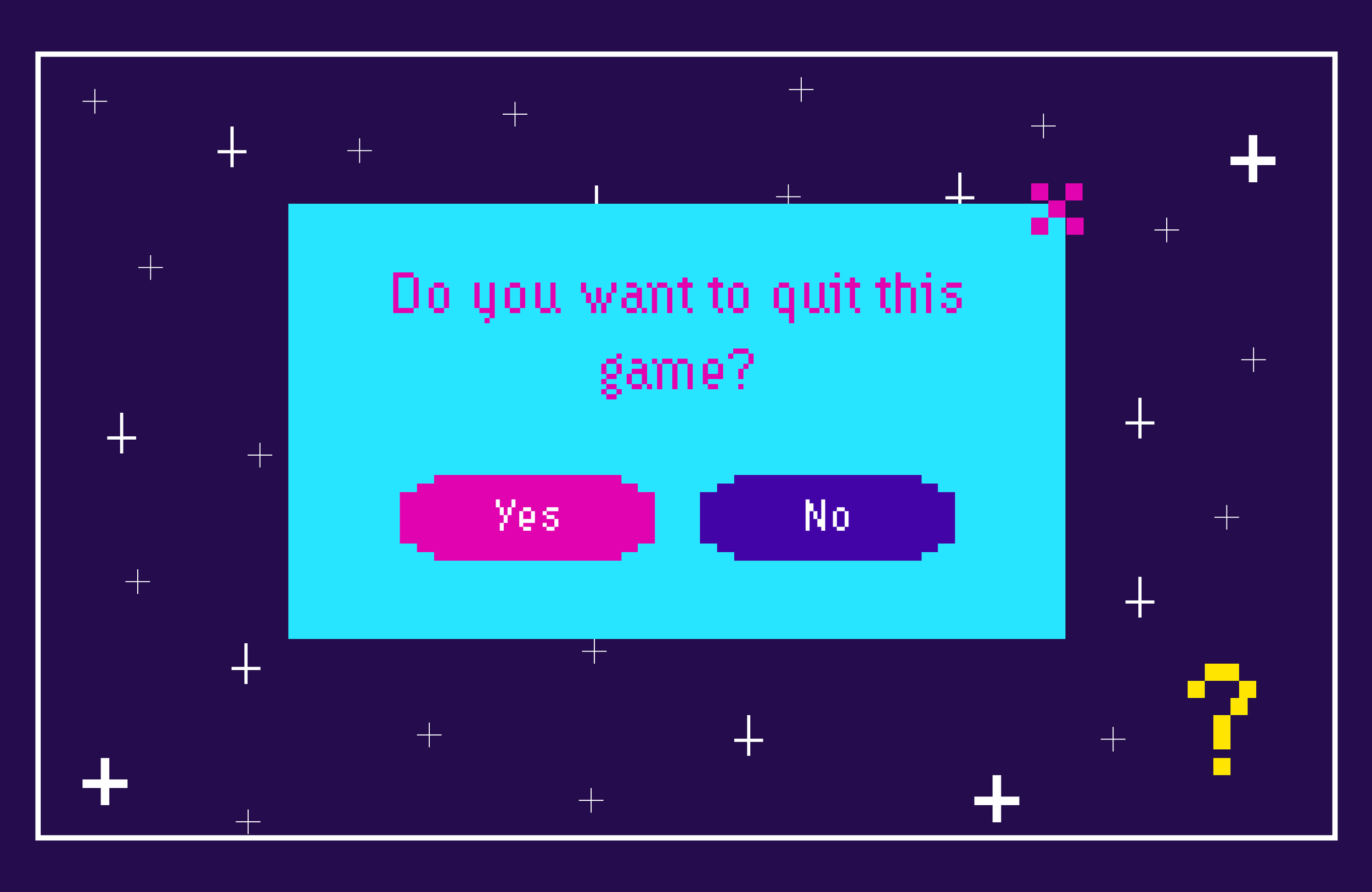
I designed a few introductory screens for the start of the game to provide context, allow players to adjust settings, and include an option to quit. I explored several layout and color combinations before settling on a pink and blue theme paired with a clean, vertical arrangement of buttons for a simple and intuitive interface.
Final Result
Challenges and Future Iterations
Designing and building this game came with a number of unexpected hurdles:
Sprite and background scaling issues: I miscalculated the dimensions and ratios of several sprites and background elements, which caused inconsistencies, particularly in the background art. This is evident in my final GameMaker background design as well.
Using Figma for pixel-based elements: Creating pixel components in Figma turned out to be inefficient. Resizing elements within frames often resulted in cropped or distorted assets, making adjustments extremely tedious and time-consuming.
Importing assets into GameMaker Studio 2: I struggled to import my screens and components from Figma into GameMaker Studio. The proportions frequently appeared off, and the elements wouldn’t align properly with the intended canvas size. As a result, some of the very detailed design elements, like the flowers, had to be removed because they became distorted upon import.
This game is nowhere near complete - it’s only just begun! I would like to make more changes and add a lot more game design elements to Stranjer to make it a fully-playable game, apart from the further plot development and environment creation:
Collectible Clues: Introduce brighter yet subtly hidden clue elements to make discovery both rewarding and challenging.
Feedback Animations: Add unique animations to visually indicate when a clue has been collected.
Sound Design Enhancements: Integrate sound effects for room transitions, clue collection, and other interactions to create a more dynamic experience.
Alien Enemies & Combat Mechanics: Introduce alien adversaries to expand gameplay variety through combat and related sound effects.
Dialogues & Narration: Incorporate character dialogue and narration to build a stronger narrative to increase immersion.
Music & Atmosphere: Develop a custom soundtrack (using tools like Strudel) to strengthen the surreal yet mysterious tone of the game and enhance flow.
Cutscenes & Worldbuilding: Add short cutscenes to support storytelling, pacing, and emotional engagement.
Expanded Rules & Controls: Implement mechanics for fighting enemies, rescuing humans who wish to return home, and refining jumping and combat controls.
In Conclusion
Working on Stranjer has been one of the most creatively fulfilling experiences I’ve had so far. I loved experimenting with a vibrant, unconventional color palette and seeing how those choices shaped the personality of the game. Beyond the visuals, this project helped me bring several technical elements to life: from camera movements that follow the player’s journey to room transitions and parallax effects that deepen the sense of exploration.
More importantly, Stranjer became a space where I could merge my skills from Visual Design Studio and Games as Emergent Experiences into one cohesive, playful experiment. Learning a new tool like GameMaker Studio challenged me to think differently about design, not just as something to visualize, but something to feel and interact with. Despite the hurdles, every pixel, color, and line of code contributed to a deeper understanding of storytelling through systems and aesthetics.
This project reminded me why I love design in the first place: it’s about curiosity, experimentation, and the joy of creating worlds, even the tiny, pixelated ones, that make people feel something!